
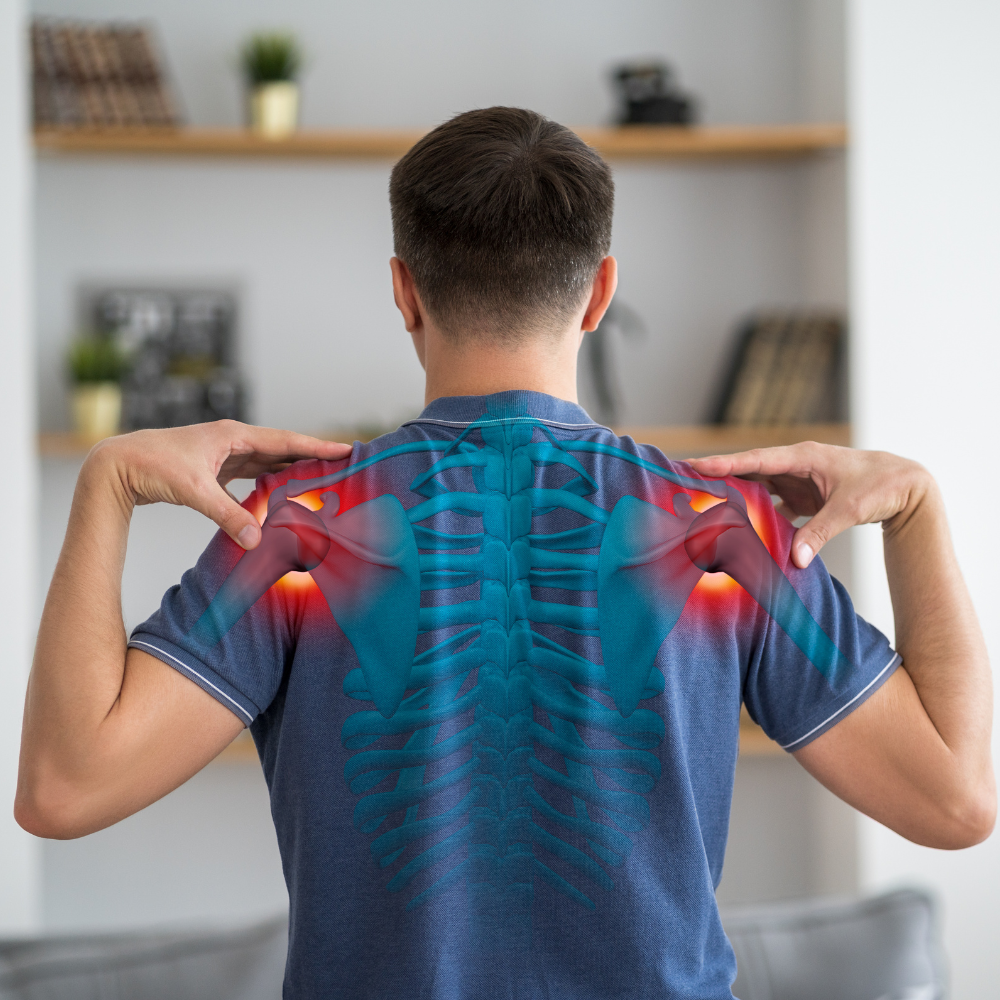
Rounded shoulders: how to improve your posture and relieve pain?
Rounded shoulders: how to improve your posture and relieve pain?
We spend more and more time sitting, whether at the office, in front of the television, or on our phones. This sedentary position, combined with other life factors, can lead to poor posture, notably rounded shoulders. This problem, far from being trivial, can cause pain, stiffness, and even long-term issues. But rest assured, there are solutions to improve your posture and relieve the pain associated with rounded shoulders. In this article, we will explore the causes, consequences, and above all, the solutions for regaining an upright and comfortable posture.
The causes of rounded shoulders
Rounded shoulders, or hunched posture, are not due to a single cause. It is often a combination of factors. Here are the main culprits:
- A sedentary lifestyle: Spending long hours sitting in front of a computer, television, or smartphone without taking regular breaks can weaken back and shoulder muscles, leading to a slumped posture.
- Stress: Stress can lead to increased muscle tension, especially in the shoulders and neck, worsening a hunched posture.
- Lack of physical exercise: A lack of regular physical activity weakens the postural muscles, which are essential for maintaining an upright posture.
- Poor postural habits: Standing hunched, leaning over your desk, or using electronic devices with poor posture can contribute to the development of a hunched posture.
- Underlying health issues: In some cases, rounded shoulders can be linked to health problems such as scoliosis or poor sleep hygiene.
The consequences of rounded shoulders
Having rounded shoulders can lead to several consequences, both in the short and long term:
- Neck, shoulder, and back pain: Incorrectly engaged muscles can cause tension, stiffness, and pain.
- Frequent headaches: Poor posture can cause tension in the cervical region, leading to headaches.
- Breathing difficulties: A hunched posture can restrict chest expansion, reducing respiratory capacity.
- Fatigue: Maintaining poor posture requires extra muscular effort, which can lead to physical fatigue.
- Digestive problems: Poor posture can put pressure on digestive organs, causing digestive issues.
- Lower self-esteem: Some people may feel uncomfortable in their own bodies due to poor posture.
How to improve your posture and relieve pain?
Fortunately, there are many solutions to improve your posture and relieve the pain linked to rounded shoulders. Here are some effective tips and techniques:
1. Awareness
First and foremost, it is essential to become aware of your current posture. Observe yourself in a mirror, take photos, or ask someone to observe you. Identifying weak points will allow you to target the necessary exercises and corrections.
2. Exercises and stretches
Regular exercise can strengthen back, shoulder, and neck muscles, thereby helping to improve your posture. Here are a few examples:
- Back and shoulder stretches: Search online for specific exercises for chest and shoulder stretching.
- Muscle strengthening exercises: Rowing, pull-ups, and exercises with light dumbbells are recommended for strengthening the back and shoulders.
- Yoga and Pilates: These disciplines promote flexibility, strength, and body awareness.
3. Using a brace
For additional support, using a brace can be beneficial, especially during recovery phases or in cases of intense pain. The S500 shoulder brace is an excellent option. It offers exquisite comfort and precise support for the shoulders thanks to its cutting-edge technology that provides intelligent compression, gentle heat therapy, and movement science for more mobility and support. It accelerates the recovery process, relieves injuries, and protects your joints. Consult the size guide below to find the one that fits you.

The S500 shoulder brace is designed to provide you with comfort and support. It is ideal for treating shoulder and cervical pain. Here is a summary of the sizes:
| Upper width | Lower width | Length | Suggested weight |
|---|---|---|---|
| 72cm - 100cm | 32cm - 39cm | 31cm | 45kg - 70kg (Size S) |
| 99cm - 116cm | 36cm - 40cm | 33cm | 70kg - 90kg (Size M) |
| 107cm - 118cm | 39cm - 43cm | 33cm | 90kg - 110kg (Size L) |
4. Improving your work environment
If you work sitting down, ensure you have an ergonomic chair that properly supports your back. Adjust the height of your computer screen to avoid leaning. Take regular breaks to get up and stretch.
5. Adopting good postural habits
Be mindful of your posture throughout the day. Stand tall, shoulders relaxed, and head held high. Avoid slouching or leaning. If you need to work on a document, place it at a comfortable height to avoid leaning forward.
6. Consulting a professional
If your pain persists despite these measures, do not hesitate to consult a healthcare professional, such as a doctor, physiotherapist, or osteopath. They will be able to diagnose the cause of your problems and propose a suitable treatment.
Conclusion
Improving your posture and relieving rounded shoulder pain is a process that requires time and perseverance. By combining postural awareness, regular exercise, the use of a brace like the S500 shoulder brace, and the adoption of good habits, you can gradually improve your posture and regain optimal comfort in your daily life. Remember that taking care of your body is a priority, and good posture contributes greatly to your overall well-being!