
Torn knee ligaments: Complete guide and practical advice
Understanding Torn Knee Ligaments
A sharp pain, a popping sensation, sudden knee instability… A torn ligament, most commonly the anterior cruciate ligament (ACL), is a common injury, especially among athletes, but it can also occur during a simple false move. This article provides a comprehensive overview of the subject, from causes to treatments, including rehabilitation and prevention advice.
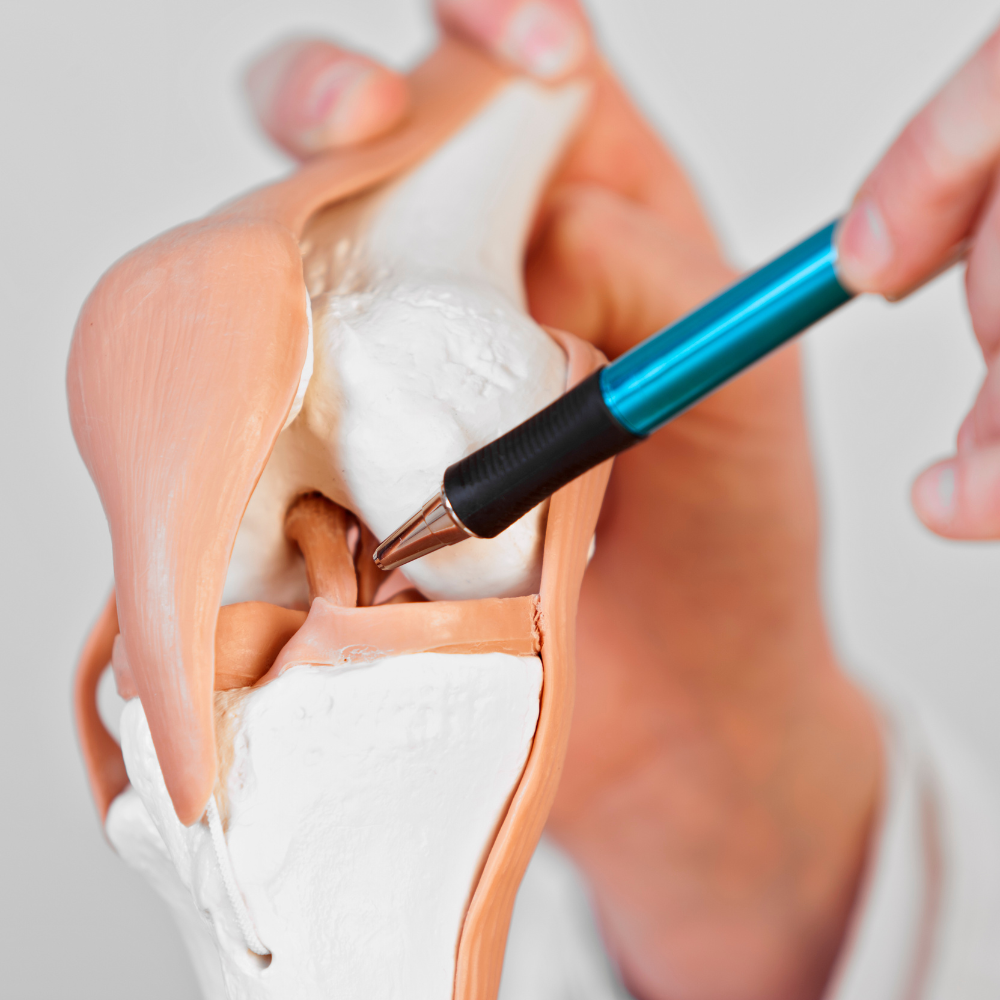
Knee Anatomy and the Role of the Cruciate Ligaments
Before diving into the details of tears, it is important to understand the anatomy of the knee. This complex joint is stabilized by various ligaments, among which the cruciate ligaments play an essential role in the rotational and anteroposterior stability of the knee.
- Anterior Cruciate Ligament (ACL): This crucial ligament prevents the tibia from sliding forward relative to the femur. It is the most frequently affected ligament during a tear.
- Posterior Cruciate Ligament (PCL): Less often injured than the ACL, the PCL prevents the tibia from sliding backward relative to the femur. Its rupture is often associated with a more violent traumatic mechanism.
- Collateral Ligaments: Located on the sides of the knee, these ligaments contribute to lateral stability.
- Menisci: These cartilaginous structures act as shock absorbers and contribute to the stability of the joint.
A torn cruciate ligament generally occurs following trauma, often during a sudden change of direction, physical contact, or a fall.
Causes and Mechanisms of Cruciate Ligament Tears
The mechanisms of injury vary depending on the affected ligament. An ACL tear is often the result of a forced rotational movement of the knee with the foot fixed on the ground (e.g., a rapid change of direction in soccer). A PCL tear is more often due to a direct impact on the tibia or knee hyperflexion.
There are multiple risk factors:
- High-risk sports: Soccer, skiing, basketball, rugby, etc.
- Poor physical condition: Weak muscles around the knee.
- History of knee injury: Increases the risk of further injury.
- Surface type: Uneven ground can increase the risk of tearing.
Symptoms of a Cruciate Ligament Tear
A cruciate ligament tear is often characterized by immediate and distinct symptoms:
- Intense and sudden pain: Felt inside or at the back of the knee.
- Rapid knee swelling: Due to fluid effusion.
- Knee instability: A sensation of the knee giving way or feeling weak.
- Limited mobility: Difficulty fully flexing or extending the knee.
- Hematoma: Presence of significant bruising.
- Popping or cracking sound at the time of injury.
It is important to note that these symptoms can vary in intensity and that some people may experience less marked symptoms.
Diagnosis of a Cruciate Ligament Tear
The diagnosis is based on several elements:
- Clinical examination: The doctor examines the knee, palpates the ligaments, evaluates the stability and mobility of the joint, and tests for the anterior drawer sign (for the ACL).
- Standard X-ray: Helps rule out a fracture or other bone lesion.
- MRI (Magnetic Resonance Imaging): The most precise imaging exam to visualize the ligaments and confirm the tear. It can also detect other associated injuries (menisci, cartilage).
Treatment of a Cruciate Ligament Tear
The choice of treatment depends on several factors: the severity of the tear, the patient's age, their level of physical activity, and their goals.
Conservative Treatment
In some cases, particularly for partial tears or in less active patients, conservative treatment may be considered. It includes:
- Rest: Avoid any activity that puts stress on the knee.
- Ice: Application of ice to reduce inflammation.
- Brace: To immobilize the knee and protect the joint.
- Anti-inflammatory drugs: To relieve pain and reduce inflammation.
- Physical therapy: To strengthen the muscles around the knee and improve proprioception.
Surgical Treatment
For complete ACL tears, particularly among athletes, surgery is often recommended. It involves reconstructing the ligament using a graft taken from another tendon in the patient's body (patellar tendon, hamstrings).
Several surgical techniques exist, and the choice will depend on individual factors. Post-operative recovery requires a period of intensive rehabilitation.
Rehabilitation After a Cruciate Ligament Tear
Rehabilitation is an essential phase for complete recovery. It is a long process that requires patience and perseverance. It includes several stages:
- Initial phase: Reducing pain and inflammation, regaining passive and active mobility of the knee.
- Intermediate phase: Targeted muscle strengthening around the knee, improving balance and proprioception.
- Return-to-activity phase: Gradual resumption of sports activities, following an adapted and progressive protocol.
The duration of rehabilitation varies depending on the severity of the injury, the surgical technique used, and the patient's cooperation.
Prevention of Cruciate Ligament Tears
Although it is impossible to eliminate all risks, certain measures can limit the chances of a cruciate ligament tear:
- Full warm-up before any sports activity: Essential physical preparation.
- Muscle strengthening: Strong quadriceps and hamstrings contribute to knee stability.
- Improvement of proprioception: Balance and coordination exercises to better control knee movements.
- Proper movement technique: Learning the correct technique for the sport being practiced.
- Choosing appropriate footwear: For better stability.
- Listen to your body: Rest in case of pain or fatigue.
In conclusion, a cruciate ligament tear is a complex injury that requires appropriate care. A medical consultation is essential to establish a precise diagnosis and determine the best treatment. Rehabilitation plays a primary role in functional recovery and the return to normal physical activity.
Note: This article is for informational purposes and does not replace medical advice. Always consult a healthcare professional for any health concerns.